
What Is Reverse Osmosis?
The Complete Guide to RO Water Filtration
From the science behind the membrane to selecting the right system for your application — everything engineers, facility managers, and water quality professionals need to know about RO technology.
Reverse osmosis (RO) is a pressure-driven water purification process that forces water through a semi-permeable membrane with pores approximately 0.0001 microns in diameter. The membrane rejects up to 99% of dissolved salts, heavy metals, bacteria, viruses, PFAS, nitrates, and hundreds of other contaminants, producing water of exceptional purity. It is the most widely deployed advanced water purification technology in the world, used in everything from household drinking water filters to industrial plants producing millions of gallons per day.
Understanding Osmosis: The Foundation
To understand reverse osmosis, you first need to understand osmosis — the natural phenomenon it reverses.
Osmosis is the spontaneous movement of water molecules across a semi-permeable membrane from a region of lower solute concentration to a region of higher solute concentration. The membrane allows water to pass but blocks dissolved molecules and ions. This movement continues until the concentration on both sides reaches equilibrium, or until the pressure buildup (called osmotic pressure) stops the flow.
Osmotic pressure is a measurable force. Fresh water has an osmotic pressure near 0 bar. Brackish water at 3,000 ppm TDS has an osmotic pressure of roughly 2 bar. Seawater at 35,000 ppm TDS exerts about 27 bar of osmotic pressure. Understanding these numbers is critical to RO system design.
The Key Insight
In nature, water flows from clean to salty across a membrane — driven by osmotic pressure. Reverse osmosis applies external hydraulic pressure greater than the osmotic pressure to push water from the salty side to the clean side, against the natural direction of flow. The membrane acts as a molecular-scale barrier, retaining dissolved ions while allowing water molecules to pass.
What Is Reverse Osmosis? The Complete Definition
Reverse osmosis is a pressure-driven membrane separation process that achieves water purification at the molecular and ionic level. Unlike conventional filtration, which physically screens particles by size, RO relies on the solution-diffusion mechanism: water dissolves into the dense polymer membrane matrix and diffuses through it under pressure, while dissolved solutes (salts, metals, organics) are rejected and flushed away in a concentrate stream.
The result is two separate streams: the permeate (purified product water, typically 95–99% contaminant-free) and the concentrate (reject water containing the rejected contaminants, typically 15–25% of inlet flow for seawater systems or 15–35% for brackish systems).
Commercial RO Systems: Engineered Precision
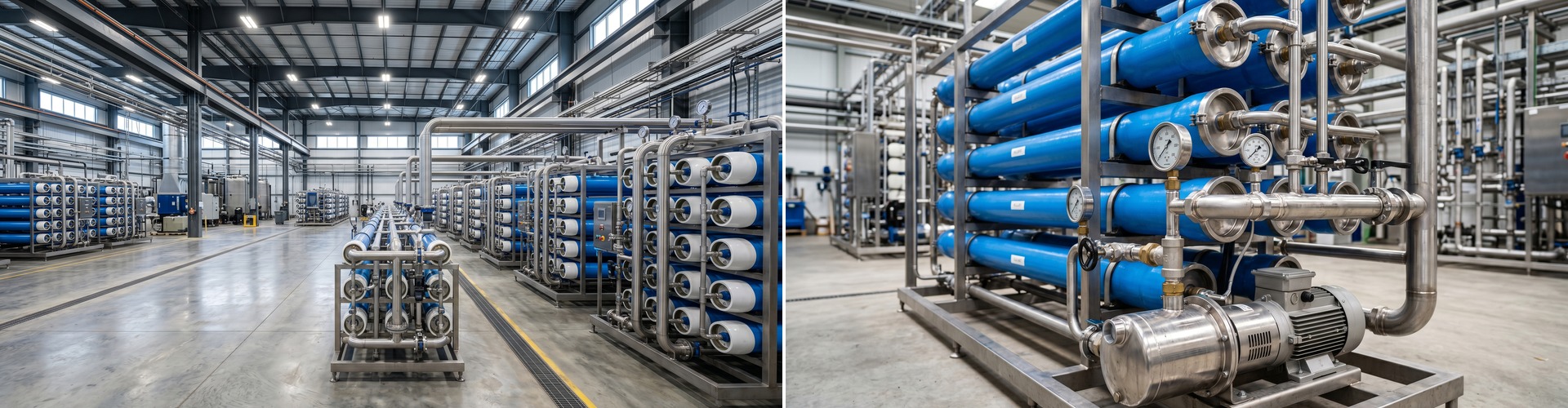
A commercial-grade RO system integrates pre-treatment, high-pressure pumping, membrane arrays, and post-treatment in a single engineered package. AMPAC USA designs and manufactures systems from 1,000 GPD to multi-million GPD for municipal, industrial, and process water applications.
Key operating parameters — flow rate, recovery ratio, salt rejection, and energy consumption — are determined by the feed water chemistry, target permeate quality, and site-specific constraints.
How Reverse Osmosis Works: Step by Step
A complete RO system is not just a membrane — it is a sequence of treatment stages that protect the membrane and optimize output quality. Here is how a full system works:
Sediment Pre-Filtration
5-micron cartridge filters remove suspended solids, sand, silt, and rust that would physically damage the RO membrane or cause fouling. This stage protects the downstream components.
Carbon Pre-Treatment
Activated carbon (GAC or carbon block) adsorbs chlorine, chloramines, THMs, and volatile organics. Polyamide RO membranes are damaged by chlorine exposure — even 0.1 ppm sustained exposure degrades rejection performance.
High-Pressure Pump
A pump raises water pressure to 50–1,200 psi depending on the feed water source. Tap water needs ~60–80 psi; brackish water needs 150–600 psi; seawater needs 800–1,200 psi. This is the most energy-intensive stage.
RO Membrane Array
Pressurized water contacts the semi-permeable membrane. Water molecules (0.00028 nm diameter) diffuse through the dense polymer layer. Ions, molecules, and pathogens are rejected and directed to the concentrate stream.
Post-Carbon Polishing
A final activated carbon stage removes any residual taste, odor, or trace VOCs from the permeate stream, delivering clean, fresh-tasting water to the point of use.
Optional: Remineralization
For drinking water applications, calcite or magnesium-oxide media restores calcium and magnesium to a palatable level and raises pH from the slightly acidic RO permeate (~6.0–6.5) to a neutral 7.0–7.5.
The RO Membrane: Where the Science Happens
The RO membrane is the heart of the system. Modern RO membranes are thin-film composite (TFC) polyamide elements — a tri-layer structure consisting of:
- Polyester support web (~120 µm): provides mechanical support
- Microporous polysulfone interlayer (~40 µm): provides structural rigidity
- Ultra-thin polyamide active layer (~0.2 µm): performs the actual ion rejection
This active polyamide layer is formed by interfacial polymerization — a reaction between an amine and an acid chloride at the membrane surface. The resulting crosslinked polymer network has an effective pore size of 0.0001 microns (0.1 nanometers) — small enough to reject hydrated sodium and chloride ions while allowing individual water molecules to pass.
Spiral-Wound Membrane Elements
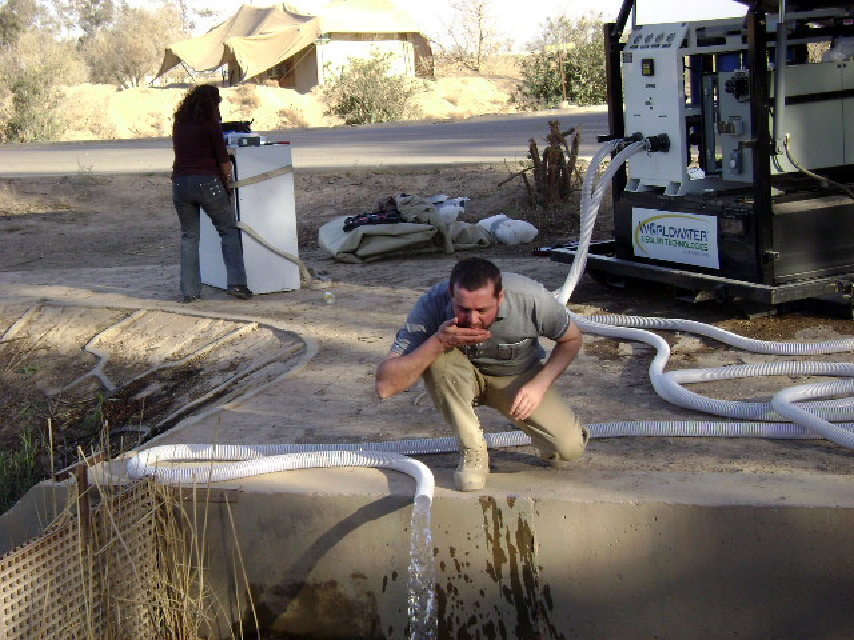
Industrial RO membranes are manufactured as spiral-wound elements: flat membrane sheets are glued to a permeate carrier and wrapped around a central permeate collection tube. A standard 8-inch diameter, 40-inch long element provides approximately 400 square feet of active membrane area.
Multiple elements are loaded in series into pressure vessels (typically 6–7 per vessel), and multiple vessels are arranged in parallel arrays. A 500,000 GPD industrial system might use hundreds of elements across dozens of pressure vessels.
Membrane Performance Parameters
Four key numbers define RO membrane performance:
- Salt Rejection Rate: Percentage of dissolved solids rejected (typically 96–99.8% for modern TFC membranes)
- Water Permeability (A-value): Volume of water passing per unit area per unit time per unit pressure (measured in LMH/bar)
- Recovery Rate: Percentage of feed water converted to permeate (residential: 25–50%; industrial: 75–85%)
- Operating Pressure: Applied hydraulic pressure; must exceed osmotic pressure of feed water
What Does Reverse Osmosis Remove? Full Contaminant Table
RO is effective against virtually every category of waterborne contaminant. The removal rates below are typical for a properly maintained TFC polyamide membrane operating at standard conditions (25°C, appropriate pressure, 75% recovery).
| Contaminant | RO Removal Rate | EPA MCL | Typical Tap Water Level | Health Concern |
|---|---|---|---|---|
| Total Dissolved Solids (TDS) | 95–99% | 500 mg/L (secondary) | 200–700 mg/L | Scale, taste, corrosion |
| Lead (Pb) | 96–98% | 0.015 mg/L | 0–0.05 mg/L | Neurotoxin; damages brain development |
| Arsenic (As) | 93–96% | 0.010 mg/L | 0–0.05 mg/L | Carcinogen; skin, bladder, lung cancer |
| Nitrates (NO₃⁻) | 83–92% | 10 mg/L as N | 0–20 mg/L | Methemoglobinemia in infants |
| Fluoride (F⁻) | 87–95% | 4.0 mg/L | 0.7 mg/L (added) | Dental/skeletal fluorosis at high levels |
| Chlorine / Chloramines | 99%+ | 4.0 mg/L (MRDL) | 0.2–4.0 mg/L | DBP formation; taste/odor |
| Bacteria (E. coli, Coliforms) | 99.9%+ | Zero | Variable | Gastroenteritis; severe illness |
| Viruses (Giardia, Cryptosporidium) | 99.9%+ | Zero | Variable | Cryptosporidiosis; giardiasis |
| PFAS / PFOA / PFOS | 90–95% | 4 ppt (2024 rule) | 0–100+ ppt in affected areas | Cancer; immune/endocrine disruption |
| Chromium (Cr VI) | 94–99% | 0.1 mg/L | 0–0.1 mg/L | Carcinogen |
| Barium (Ba) | 95–98% | 2.0 mg/L | 0–2 mg/L | Cardiovascular effects |
| Copper (Cu) | 97–99% | 1.3 mg/L | 0–1 mg/L | Liver/kidney damage at high exposure |
| Mercury (Hg) | 95–98% | 0.002 mg/L | <0.001 mg/L | Neurotoxin |
| Radium / Uranium | 85–95% | 5 pCi/L (Ra); 0.03 mg/L (U) | Variable; highest in granite regions | Radioactive; bone cancer risk |
| Sodium / Chloride (NaCl) | 94–98% | No federal MCL | 20–250 mg/L | Taste; hypertension at high intake |
| Sulfates (SO₄²⁻) | 96–99% | 250 mg/L (secondary) | 50–500 mg/L | Laxative effect at high levels |
Note: Removal rates vary with feed water chemistry, temperature, recovery rate, and membrane condition. Values represent typical performance of new TFC membranes at standard test conditions (25°C, rated pressure, 15% recovery).
Need Help Selecting the Right RO System?
Our engineers have designed systems from 50-GPD home filters to 10-million-GPD desalination plants. Tell us your water source, flow rate, and water quality — we’ll engineer and quote the right solution.
Get a Free Engineering Quote Browse All RO SystemsTypes of Reverse Osmosis Systems
Reverse osmosis technology scales from countertop units producing a few gallons per day to industrial plants delivering millions of gallons. The right system depends on your flow rate requirements, feed water quality, space constraints, and budget.
Residential RO Systems
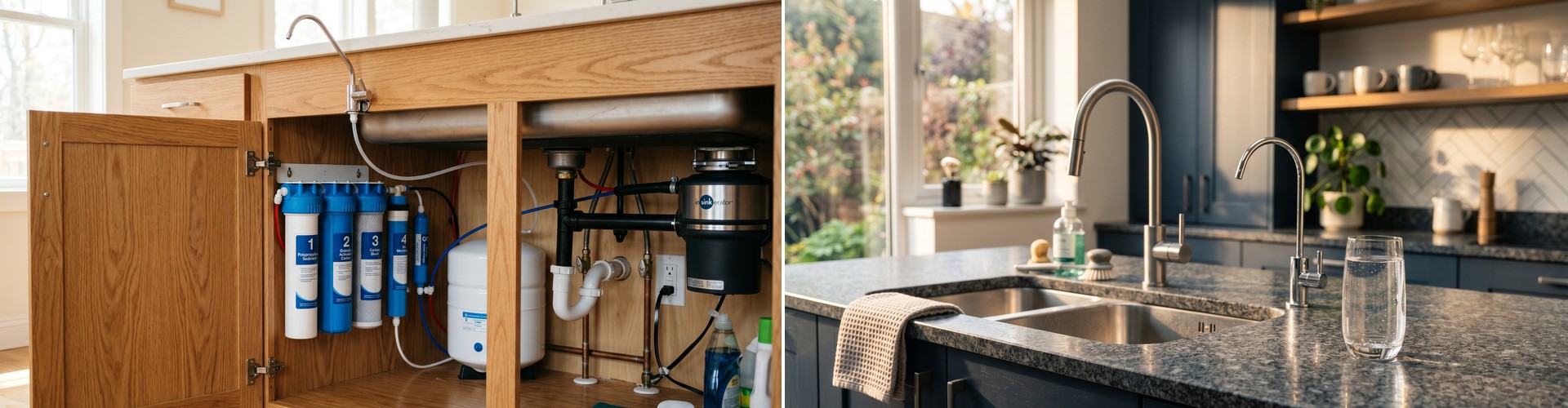
Under-sink or countertop units designed for home drinking water. Typically 50–100 GPD, stored in a pressure tank. 4–6 stage filtration. Simple DIY installation.
Commercial RO Systems
For restaurants, car washes, hotels, labs, and light manufacturing. Continuous-flow design, automatic controls, multi-membrane configuration. NSF-certified options available.
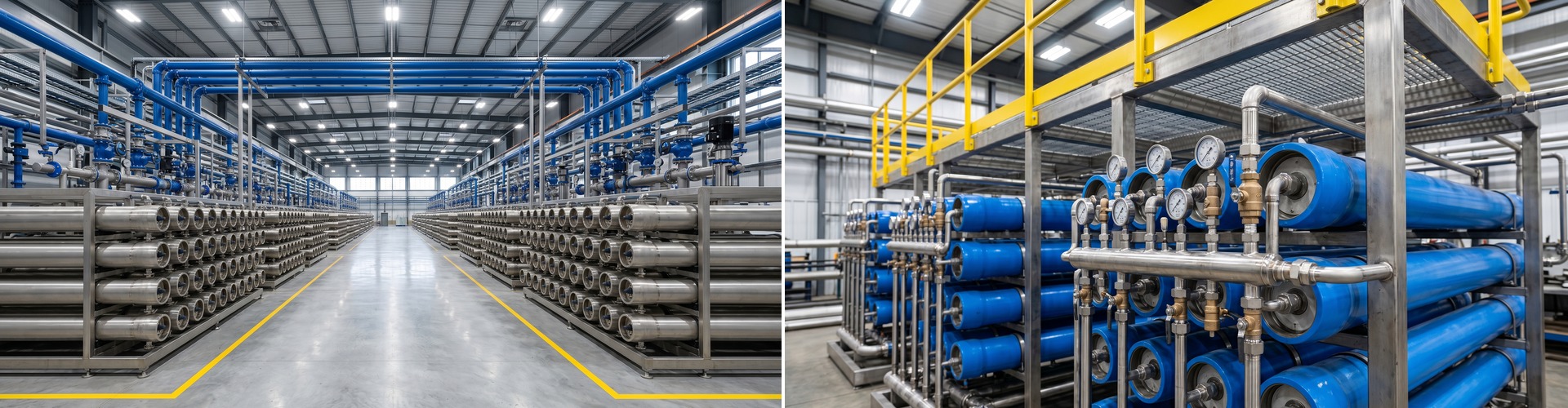
Industrial RO Systems
Custom-engineered for power generation, semiconductor manufacturing, pharmaceutical water, food processing, and mining. Multi-stage, SCADA-controlled, high-recovery designs.
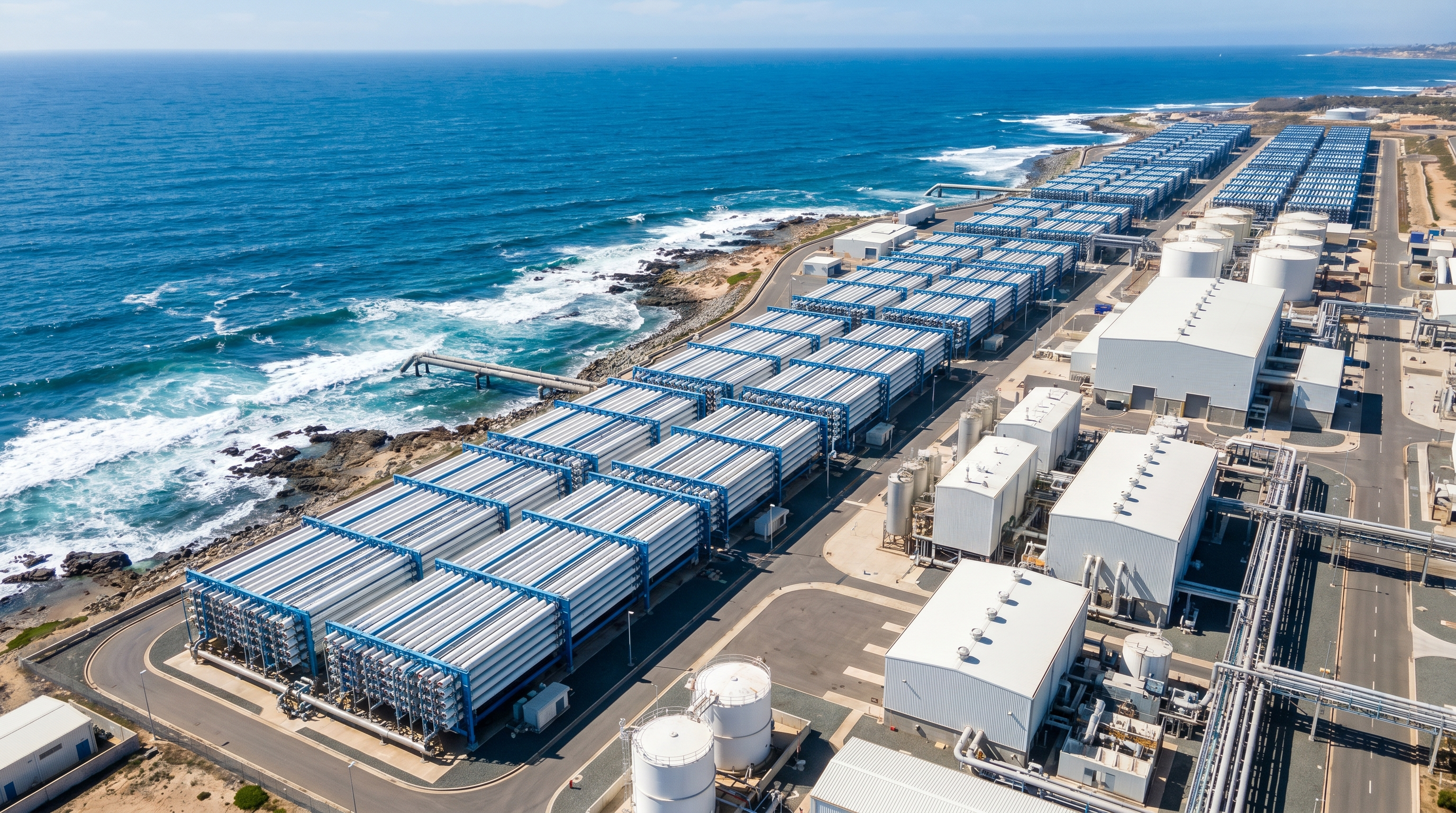
Seawater Desalination (SWRO)
Converts seawater (30,000–45,000 ppm TDS) to potable water using high-pressure RO membranes. Energy recovery devices reduce operating costs by up to 60%. Used for coastal municipalities, islands, offshore platforms, and naval vessels.
RO vs. Other Water Filtration Methods
Choosing the right purification technology requires understanding what each method can and cannot remove. Here is a direct comparison of the most common water treatment approaches:
| Technology | Pore Size | Removes TDS | Removes Bacteria | Removes Viruses | Removes Nitrates | Removes PFAS | Removes Chlorine | Energy Use |
|---|---|---|---|---|---|---|---|---|
| Reverse Osmosis (RO) | 0.0001 µm | * 95–99% | * 99.9% | * 99.9% | * 83–92% | * 90–95% | * (w/carbon) | High |
| Ultrafiltration (UF) | 0.01–0.1 µm | * No | * 99.9% | ~ Partial | * No | * No | ~ With carbon | Low–Med |
| Nanofiltration (NF) | 0.001 µm | ~ 60–80% | * 99% | * 95% | ~ 50–70% | ~ 70–85% | ~ With carbon | Medium |
| Activated Carbon | N/A (adsorption) | * No | * No | * No | * No | ~ Limited | * 99% | Very Low |
| Distillation | N/A (phase change) | * 99% | * 100% | * 100% | * 98% | ~ Some carry-over | * | Very High |
| UV Disinfection | N/A (radiation) | * No | * 99.99% | * 99.99% | * No | * No | * No | Very Low |
| Sediment Filter | 1–50 µm | * No | * No | * No | * No | * No | * No | Very Low |
RO is the only single-technology solution that simultaneously addresses dissolved salts, heavy metals, pathogens, PFAS, and organics. It is typically paired with UV disinfection and activated carbon for comprehensive protection.
Where Is Reverse Osmosis Used?
Seawater Desalination
RO is the dominant technology for converting ocean water into fresh water. Modern SWRO plants — from Saudi Arabia's Ras Al-Khair (1.03 billion GPD) to small island systems serving 500 people — all rely on high-pressure RO membranes. Energy recovery devices (ERDs) capture pressure energy from the brine stream, reducing energy consumption to 2.5–4.0 kWh per cubic meter — a dramatic improvement over the 15–20 kWh per cubic meter of thermal desalination.
Industrial Process Water
Boiler feedwater, cooling tower makeup, semiconductor rinse water, and pharmaceutical WFI all require RO-grade purity.
Hemodialysis Water
Dialysis water must meet AAMI standards (<1 mg/L TDS for many contaminants). RO is the standard purification step before ion exchange polishing.
Brackish Water Treatment
Groundwater and surface water with 1,000–10,000 ppm TDS is treated by lower-pressure brackish RO systems for municipal drinking water production.
Marine / Naval
Shipboard watermakers convert seawater to drinking water for crew. Military ROWPU systems provide field-deployable water purification for armed forces worldwide.
Agriculture / Hydroponics
RO removes excess sodium, chloride, and bicarbonates from irrigation water, improving crop yields in high-TDS regions.
Food & Beverage
Breweries, beverage manufacturers, dairies, and food processors use RO to standardize water chemistry, concentrate product streams, and meet FSMA standards.
AMPAC USA Serves These Industries
How to Choose the Right RO System
Selecting an RO system requires matching system capacity, pressure rating, and configuration to your specific feed water and production requirements. Key parameters to determine before specification:
Pre-Design Checklist
- Feed Water TDS: Determines operating pressure and membrane type (tap, brackish, or seawater grade)
- Required Flow Rate (GPD or m³/hr): Sizes the membrane array and pump
- Target Permeate Quality: Define TDS, specific contaminants, and purity class (USP, ASTM Type I/II, AAMI)
- Recovery Rate Target: Higher recovery = less waste water but higher scaling risk
- Feed Water Contaminants: Iron, silica, hardness, biological load, and oxidizers affect pre-treatment design
- Available Pressure: Municipal systems typically provide 40–80 psi; groundwater wells vary significantly
- Space and Power Constraints: Industrial systems may require significant floor space and 3-phase electrical
- Regulatory Requirements: NSF/ANSI 58 (residential), NSF/ANSI 61 (commercial), FDA, AAMI, or USP standards
AMPAC USA System Selection Guide
With over 30 years of RO system design and manufacturing experience, AMPAC USA engineers review your water analysis report and production requirements to specify the optimal system configuration — including pre-treatment, membrane selection, cleaning-in-place (CIP) capability, controls, and skid design. All systems are factory-tested before shipment.
→ Learn How to Request a Water Treatment QuoteFrequently Asked Questions About Reverse Osmosis
The most common questions about RO technology — answered with the precision engineers and facility managers need.
AMPAC USA: Over 30 Years of RO System Engineering
From 50-GPD under-sink filters to million-gallon-per-day seawater desalination plants — AMPAC USA designs, manufactures, and services reverse osmosis systems for every scale and application. NSF-certified components, factory-tested systems, 24/7 technical support.
Request a Free Engineering Consultation View All RO SystemsLearn More: Related Water Treatment Topics
FO vs RO: how emerging membrane technology compares Seawater Desalination
SWRO technology, applications, and AMPAC systems Commercial RO Systems
1,000–100,000 GPD systems for business applications Industrial RO Systems
High-capacity process water for demanding applications Brackish Water Treatment
Converting groundwater and surface water to drinking quality Technical Support
24/7 RO system support, troubleshooting, and maintenance